
A Practical Compliance Update for Building Owners, Responsible Persons and Care Home Managers
As Bob Dylan once famously sang when marking a generational shift, “The times they are a-changin’.” In fire safety, they’ve changed quite a lot. Two years on from the implementation of the Building Safety Act, the UK’s fire safety landscape continues to evolve. What began as a legislative response to the lessons of the Grenfell tragedy has developed into a more rigorous framework, placing greater accountability on building owners, operators and duty holders than ever before.
For owners and managers of Higher-Risk Buildings (HRBs), the old definition of compliance – i.e. simply having fire doors installed and the occasional, casual risk assessment – is no longer enough.
Welcome to Modern Fire Door Ownership
The paperwork has multiplied, the expectations have increased, and the excuse of “I thought someone else was dealing with it” just isn’t acceptable anymore.
The Building Safety Act, alongside amendments to the Fire Safety Order and the Fire Safety (England) Regulations, has significantly increased scrutiny of passive fire protection measures.
Fire doors are probably the hardest-working, least appreciated components of any building. They’re slammed, kicked, and generally treated rather like an inconvenience – right up until the point where they’re expected to save lives.
So, in this new reality of fire door ownership, duty holders are expected to demonstrate that their doors are actually being looked after. Installing a compliant fire door 10 years ago doesn’t earn it a lifetime achievement award. Like anything that gets used hundreds of times a day, it needs regular checking, maintenance, and, occasionally, a little TLC.
Knowledge Check: Are You Meeting Current Expectations?
Building owners and managers – this one’s for you: can you answer “yes” to the following questions?
Fire Door Obligations Checklist
✓ Do you know exactly how many fire doors are within your building?
✓ Are all fire doors uniquely identified and recorded?
✓ Are inspections being completed at the required frequencies?
✓ Can you demonstrate corrective actions following inspections?
✓ Are residents and staff prevented from wedging doors open?
✓ Are communal fire doors closing fully and latching correctly?
✓ Have all alterations to doorsets been assessed by competent persons?
✓ Do you have documented evidence available for auditors, insurers and regulators?
If your answer to any of the above is “no” or “not sure,” then there may be gaps (if you’ll pardon the pun) in your compliance strategy.
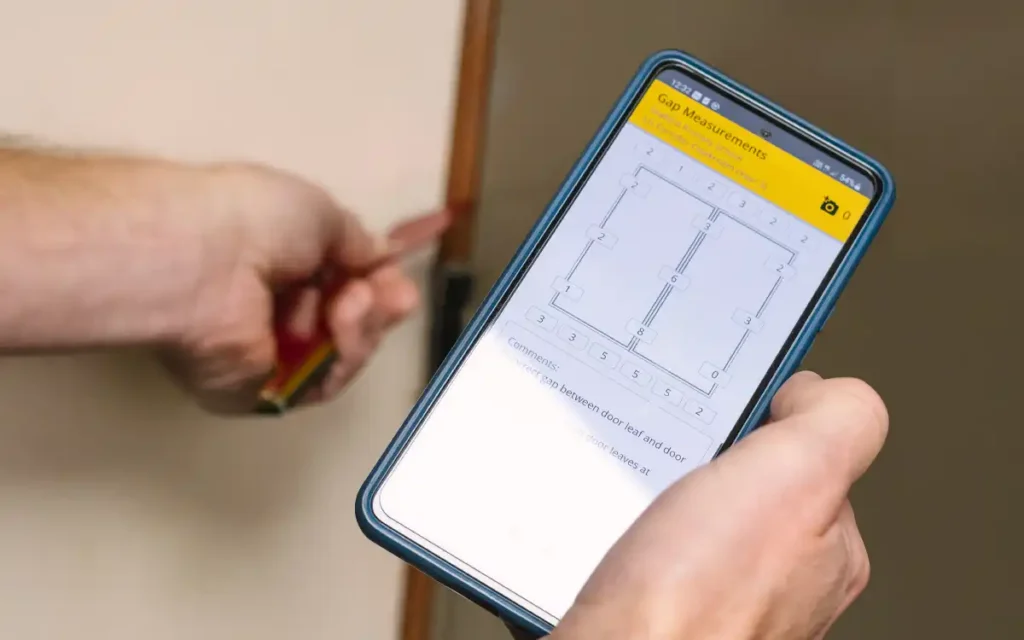
Mind the gap. DorTrak fire door inspection software – created and used by Fireco.
Care Homes Face Additional Challenges
While all residential buildings have seen increased regulatory focus, care homes occupy a particularly sensitive position – and one we understand well at Fireco.
Residents are often less able to self-evacuate, meaning compartmentation and fire door performance become even more critical if a fire should start. We all remember Rosepark and the subsequent findings of the lengthy investigation – a prime example of where these kinds of failings have dire consequences.
For care homes, fire doors are not simply a regulatory requirement; they are a key component of progressive horizontal evacuation strategies, providing crucial time for staff to move residents safely away from danger.
Are your doors up to the job?
Care Home Fire Door Obligations: Quick-Reference Checklist
✓ Are all bedroom fire doors self-closing and fully operational?
✓ Are hold-open devices tested regularly?
✓ Are smoke seals and intumescent strips intact?
✓ Do staff understand the importance of keeping fire doors unobstructed?
✓ Are corridor fire doors inspected and maintained?
✓ Are damaged doors reported and repaired promptly?
✓ Are fire door inspection records readily available?
✓ Have evacuation procedures been reviewed to reflect current resident needs?
Unsurprisingly, regular inspections remain the most effective way to identify issues before they become a liability – and are something we carry out every day across the country.
The 6th April Update: A New Focus on Assisted Evacuation
A major development for building managers arrived with the implementation of the Fire Safety (Residential Evacuation Plans) (England) Regulations 2025 on 6 April 2026. The regulations introduce Residential Personal Emergency Evacuation Plans (RPEEPs) and require duty holders in certain residential buildings to make reasonable efforts to identify residents who may need assistance evacuating during a fire, with appropriate planning and information sharing to support emergency response.
While many care homes already undertake resident-specific evacuation planning, the new requirement reinforces a growing industry focus: taking on individual evacuation needs and ensuring that building systems support those plans.
This development, introduced to improve fire safety outcomes for residents who may have mobility, sensory or cognitive impairments, underlines the importance of balancing fire compartmentation with day-to-day accessibility – a balance that sits at the heart of everything we do here at Fireco.
The Problem With Managing Fire Doors in 2026
For many organisations, managing fire doors has become a game of fire safety bingo: One contractor installed them. Another inspected them. Someone else fixed a few. And who knows where the hold-open devices came from? Fragmented operations like this leave records scattered and accountability unclear.
Fine, in theory, until, of course, a risk assessor, insurer, or fire inspector asks to see your records. Then it becomes an afternoon of desperately searching inboxes, wondering if Dave in maintenance still has that report from 2023. Or chasing three different companies, all of whom have had staff changes since the work was completed, for paperwork.
It’s a problem we hear about regularly, and it’s one we’re dedicated to solving.
One Partner for the Entire Fire Door Lifecycle
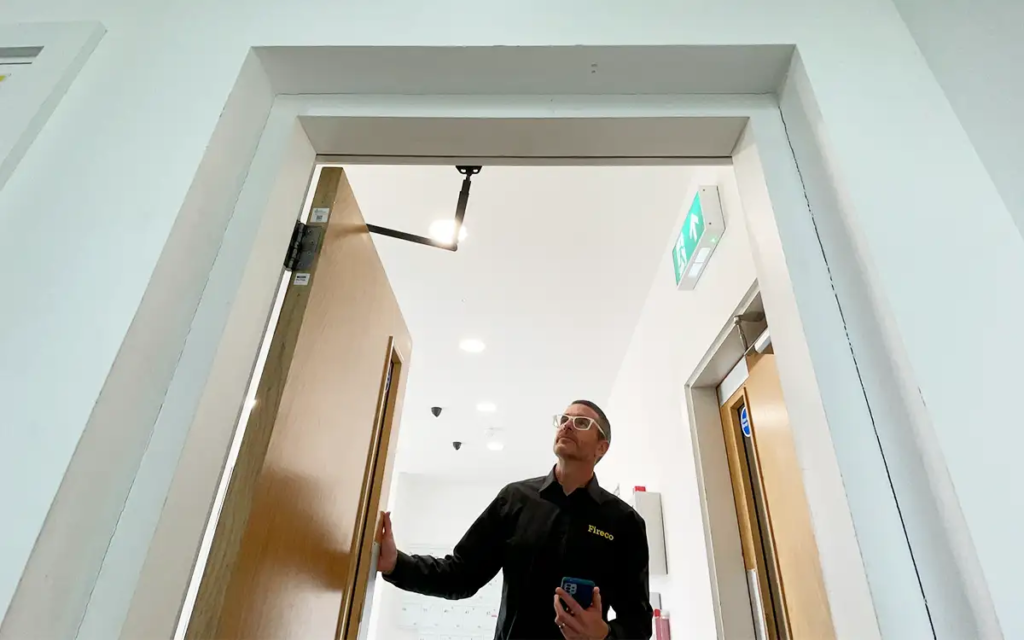
We believe that we’re one of very few organisations in the UK able to manage fire doors across every stage of their life – from first installation to ongoing compliance, year after year.
From certified installation and regular inspection right through to maintenance, remediation and intelligent hold-open solutions, we offer those responsible a genuinely end-to-end service. That means a single relationship, a single audit trail, and a consistent standard of care.
Installation and Remediation
Our qualified engineers supply and install fire doorsets to certified standards and carry out remedial works where existing doors are found to be deficient. Whether you are starting from scratch or bringing an existing estate up to standard, we can manage the process from specification through to completion.
Inspection and Digital Reporting
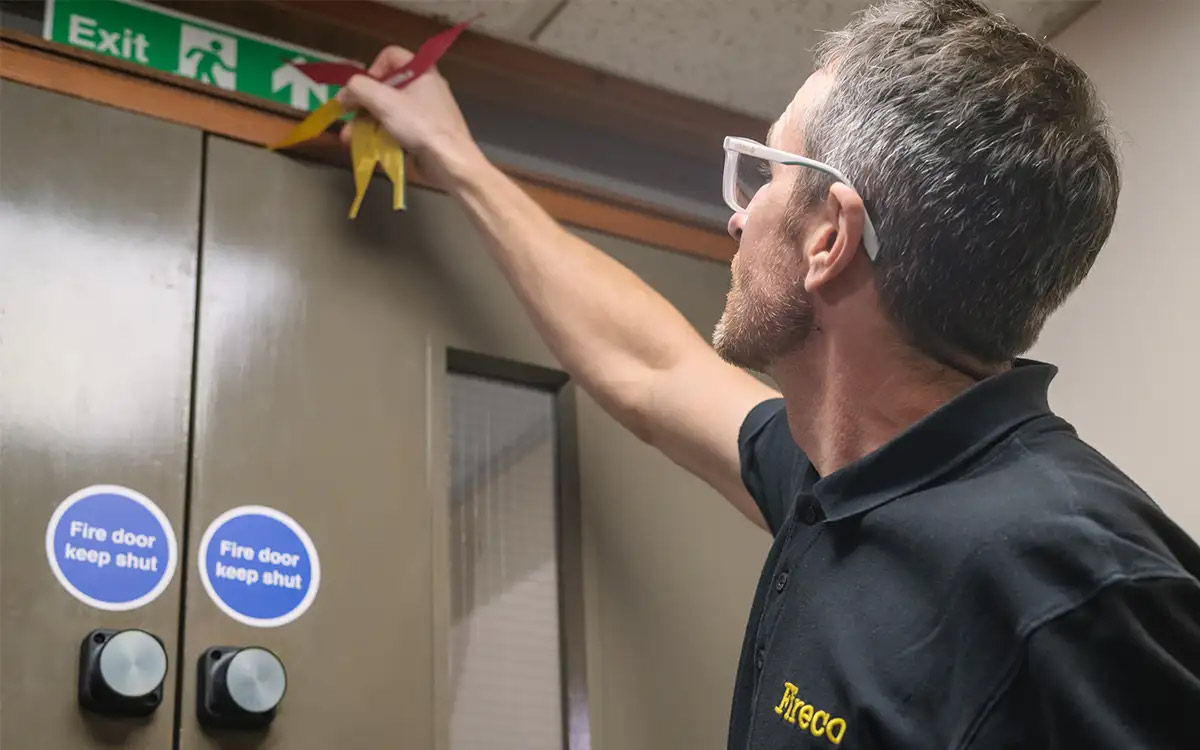
Our inspection service uses DorTrak – our own digital platform – to carry out comprehensive fire door assessments and generate instant reports while the inspector is still on site. Each door is assigned a unique tag, creating a permanent digital record that contributes directly to the building’s Golden Thread. A traffic-light pass/fail system makes remedial priorities clear at a glance, and reports are immediately available.
For organisations managing large or complex fire door estates, DorTrak transforms what is often a fragmented paper trail into structured, auditable records.
Keeping Doors Open Safely
Let’s talk about wedging, because we wouldn’t be Fireco if we didn’t. Every fire door inspector has seen them: Rubber wedges shaped like worms. Wooden wedges shaped like… a wedge. Fire extinguishers. Folded bits of cardboard. We’ve even seen the odd shoe pressed into service. They all solve the same short-term problem, whilst simultaneously creating an even bigger one.
We say this often, but it’s rarely a deliberate attempt to sabotage your office, school or care home. Heavy doors are annoying. Wedging happens because a safer alternative hasn’t been provided. And we all swear we’ll stick around to take the wedges out from the doors if the alarm rings, but when instinct kicks in, telling us to fight or flee, we don’t tend to hang about.
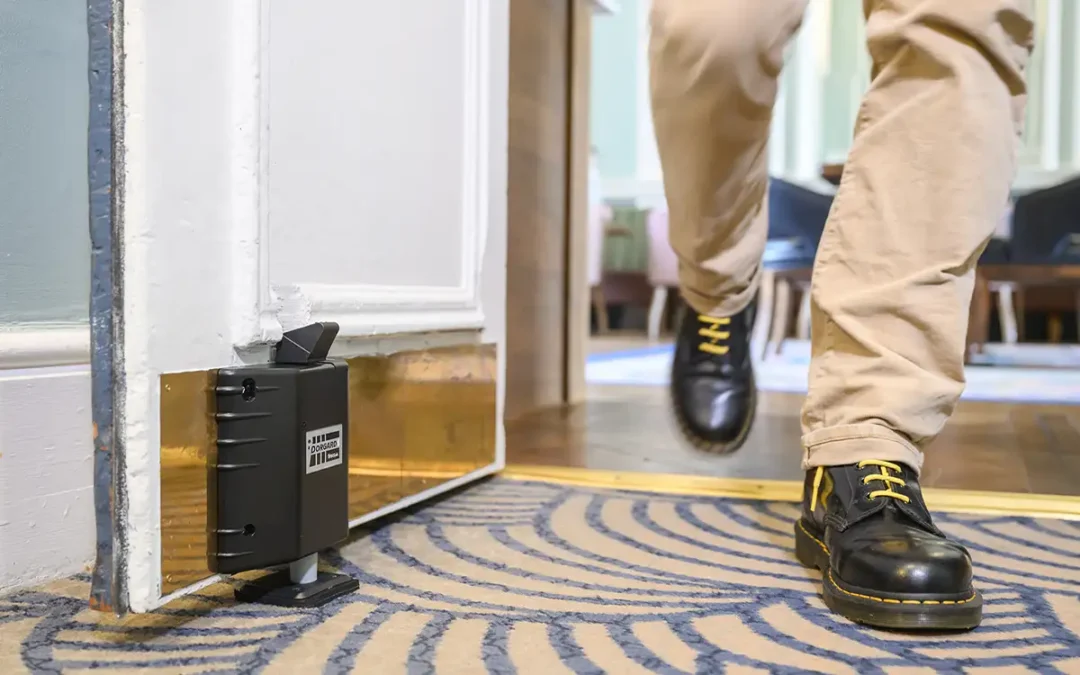
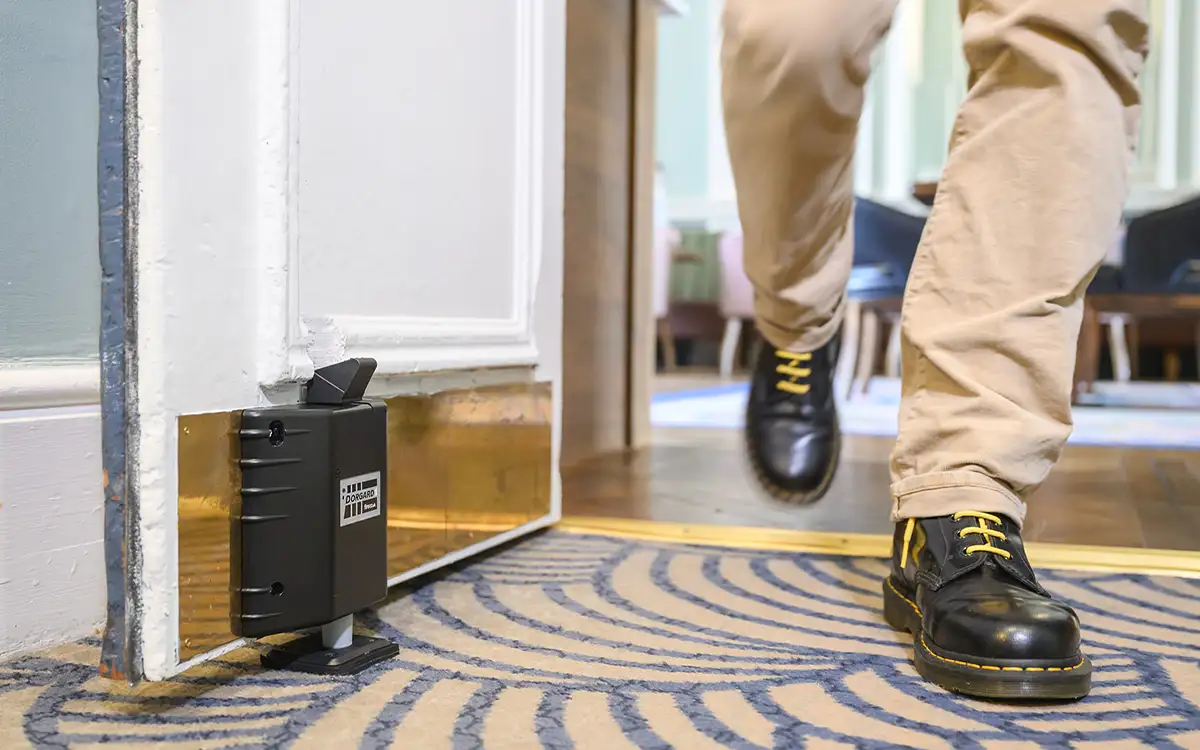
Our range of hold-open devices eliminate these problems without sacrificing people or property. Dorgard – with over one million units sold – is our wireless fire door retainer, holding doors open safely and releasing them automatically when the alarm sounds. In care homes, this means staff can move residents, trolleys and equipment through corridors freely, without doors constantly needing to be propped open or held by hand. DorMag offers a magnetic alternative where a floor-mounted device is not appropriate, making it well suited to care settings with uneven or carpeted floors where a discreet, wall-mounted solution is preferred.
Ongoing Maintenance
Compliance does not end with installation or inspection. Scheduled maintenance plans, re-inspection programmes and responsive call-out services are all part of Fireco’s ongoing commitment to integrated safety.
Looking Ahead
If there’s one clear trend over the last couple of years, it’s this: regulations increasingly expect you to prove compliance, not just promise it.
The organisations best prepared for future regulatory scrutiny will be those that treat fire doors as critical life-safety assets with a robust, documented approach to every stage of their service life.
Ten years ago, fire door compliance largely meant fitting the right door and hoping nobody mistreated it afterwards.
Today, it’s about proving that every fire door is still doing exactly what it was designed to do – and being able to produce evidence at a moment’s notice.
That sounds like a lot of work. Because it is.
Managing that through a patchwork of suppliers is increasingly difficult to sustain unless you ensure you have a golden thread of information that has everything documented and easily accessible in years to come.
Fortunately, it’s also exactly the kind of thing we at Fireco spend every day helping organisations manage.
Book an inspection or contact our experts about our comprehensive fire safety services at fireco.uk or 01273 320650.



0 Comments