
There’s a scene that will be immediately familiar to anyone who works in a school. It’s 8.45am. The site manager has done a lap of the building, only to find that the fire doors – the ones that were diligently closed yesterday, and the day before – are wedged open again.
Usually it’s a rubber wedge. Other times it’s a chair, a bin, and, with an irony that would be funny if it wasn’t so serious, it’s a fire extinguisher. For school business managers and site teams, the wedged-open fire door is one of those problems that never quite goes away. You close it, it gets propped open again and the cycle continues.
Illegal, but everywhere
This might make for uncomfortable reading but it’s vitally important: propping open a fire door isn’t a grey area, a technicality, or one of those rules that everyone quietly ignores. It’s a clear breach of the Regulatory Reform (Fire Safety) Order 2005. The Responsible Person – the head teacher, in most schools – has a legal duty to ensure fire doors are properly maintained and functioning. A wedge in the door is a compliance failure, full stop.
And yet, those wedges just keep on wedging!
Perhaps it’s not just worth asking “Why do people do this?” but also “Why does it keep happening, even in schools where the staff are professional and the site team knows the rules?” The answer, it seems, is less about negligence and more about the everyday reality of working in a busy school building.

That’s a negative. Wedging fire doors open is a clear breach of the Regulatory Reform (Fire Safety) Order 2005.
Seven reasons why the wedge keeps appearing:
1. Schools are relentlessly busy
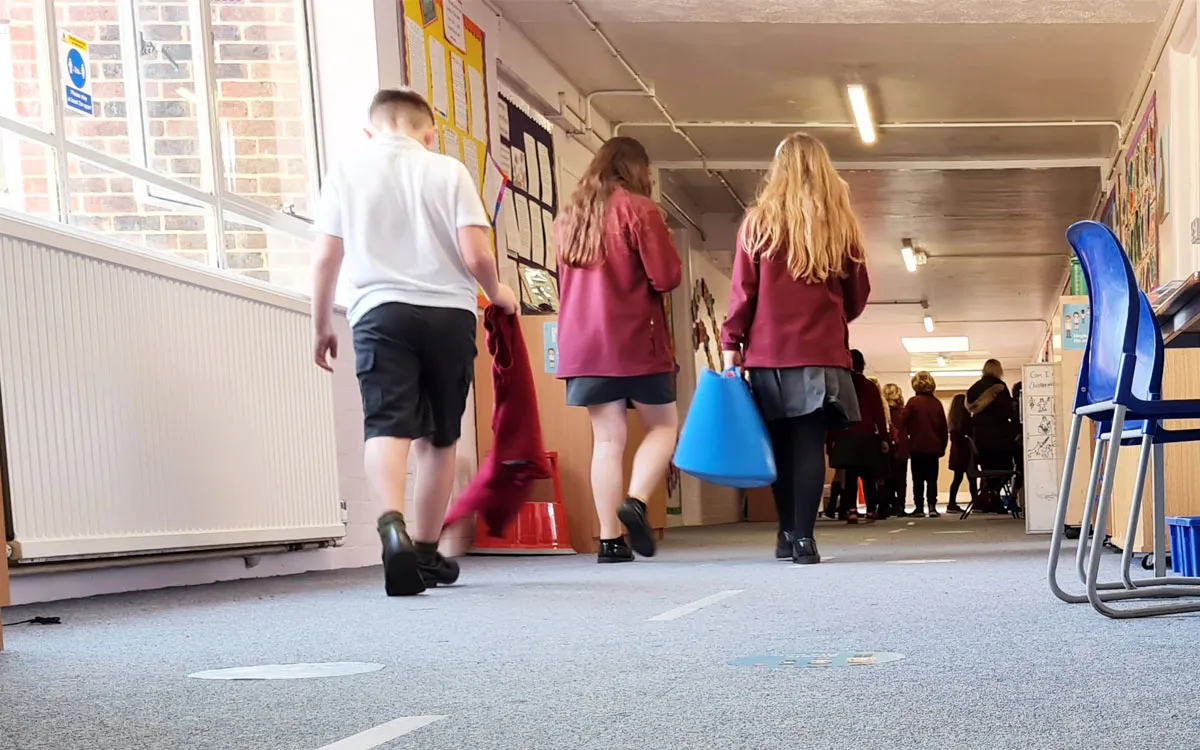
Between lessons, corridors fill with students and staff carrying books, equipment, chairs etc.. A self-closing fire door is a perfectly sensible safety measure, right up until you’re trying to navigate it with your hands full. Propping it open “just for a short while” becomes a habit that nobody questions, because nobody’s thinking about it.
2. The ventilation problem is real
Many school buildings aren’t designed with modern occupancy levels in mind. Classrooms become warm. Fire doors are heavy and well-sealed, and keeping them closed can turn a classroom into something resembling a greenhouse by mid-morning. Teachers aren’t trying to cause a fire hazard; they’re trying to create a space where it’s possible to learn. The door goes open, a breeze comes in, and the wedge stays put.
3. Some door closers just aren’t up to the job
To put it bluntly, a fire door closer that slams with enough force to stop a lesson in its tracks isn’t doing its job properly. Neither is one so stiff that a ten-year-old can’t open it unassisted. Both situations produce the same result – the door gets propped open to avoid the daily aggravation. A fire safety feature that annoys people is one that gets ignored.
4. Teachers are managing more than one space at once
Many classrooms open onto shared areas, practical spaces, or corridors that form part of the working environment. A TA with a group in the corridor, a reading corner just outside the classroom door, resources stored across the hall etc. In these situations, a closed fire door feels less like a safety measure and more like an obstacle to doing the job. Propping it open is a practical fix to a practical problem. Unfortunately, it just happens to be an illegal one.
5. “Just while we do this” has a habit of staying
Every site manager knows this one. A delivery arrives and a contractor needs access. Equipment is being moved between buildings. The door gets propped open “just for ten minutes” and then something else needs attention, and ten minutes becomes an hour, and the wedge is still there at 4pm. Temporary measures have a remarkable ability to become permanent ones.
6. It’s always been done this way
Culture is arguably the most stubborn obstacle of all, as new staff inherit habits from long-serving staff. Students walk past propped-open fire doors every day and assume it must be acceptable. The behaviour becomes so thoroughly normalised that raising it feels like overreacting. Without active, deliberate effort to change the culture, the wedge stays under the door from sheer force of habit.
7. The knowledge doesn’t always filter down
School business managers and senior leaders are typically well-versed in fire safety legislation. But a teaching assistant propping a door open with a stool almost certainly isn’t thinking about the Regulatory Reform Order. Awareness at the top of the organisation doesn’t automatically translate into behaviour at the bottom.
I was recently in a school inspecting fire doors – mainly corridor and classroom doors – and the most common issues I found apart from the already mentioned wedging and propped open doors (which, incidentally, would fail visually on an inspection) are failed or missing door closers, excessive gaps, broken or missing drop seals, damaged, incomplete or missing intumescent/smoke seals, and probably the most common – physical impact damage, cracked panels and loose hinges; not really surprising as these are heavy doors, used daily.
The practical consequences of the excessive gaps are the rapid smoke and fire spread, and the loss of compartmentation, which is so important and engineered to localise a fire. The most scary consequence is the increased risk of casualties, where escape routes become filled with dense smoke, giving occupants less time to escape to safety.
Tony White, Field Service Engineer, Fireco.
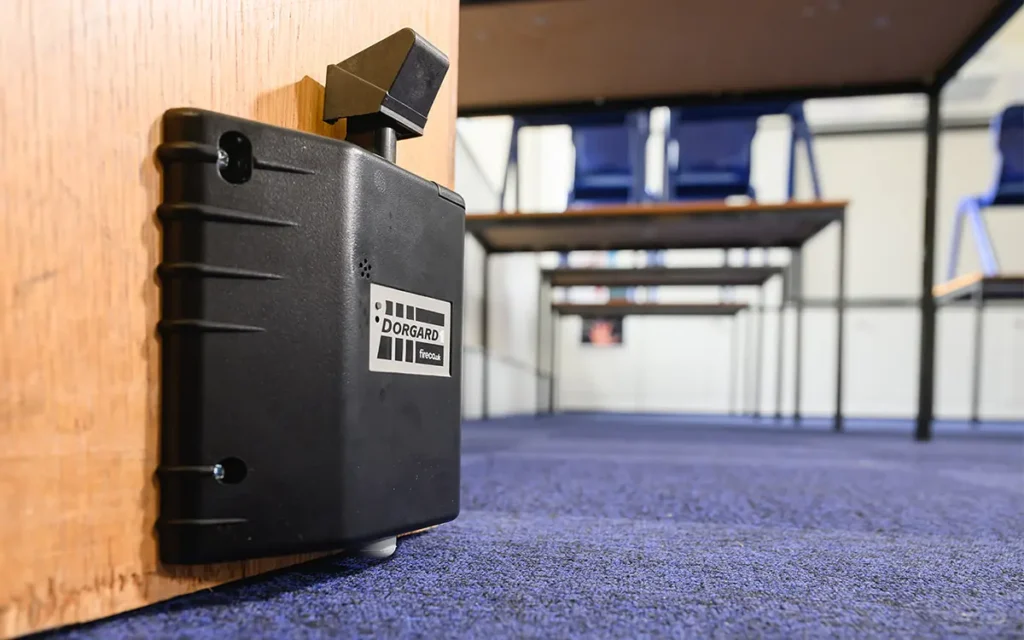
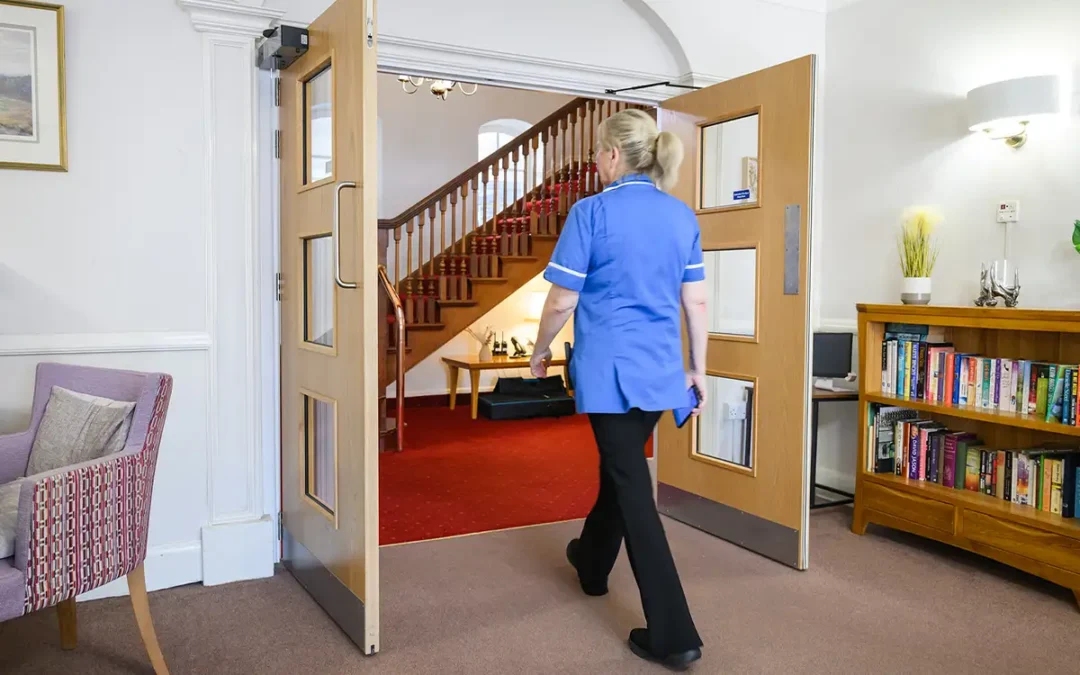
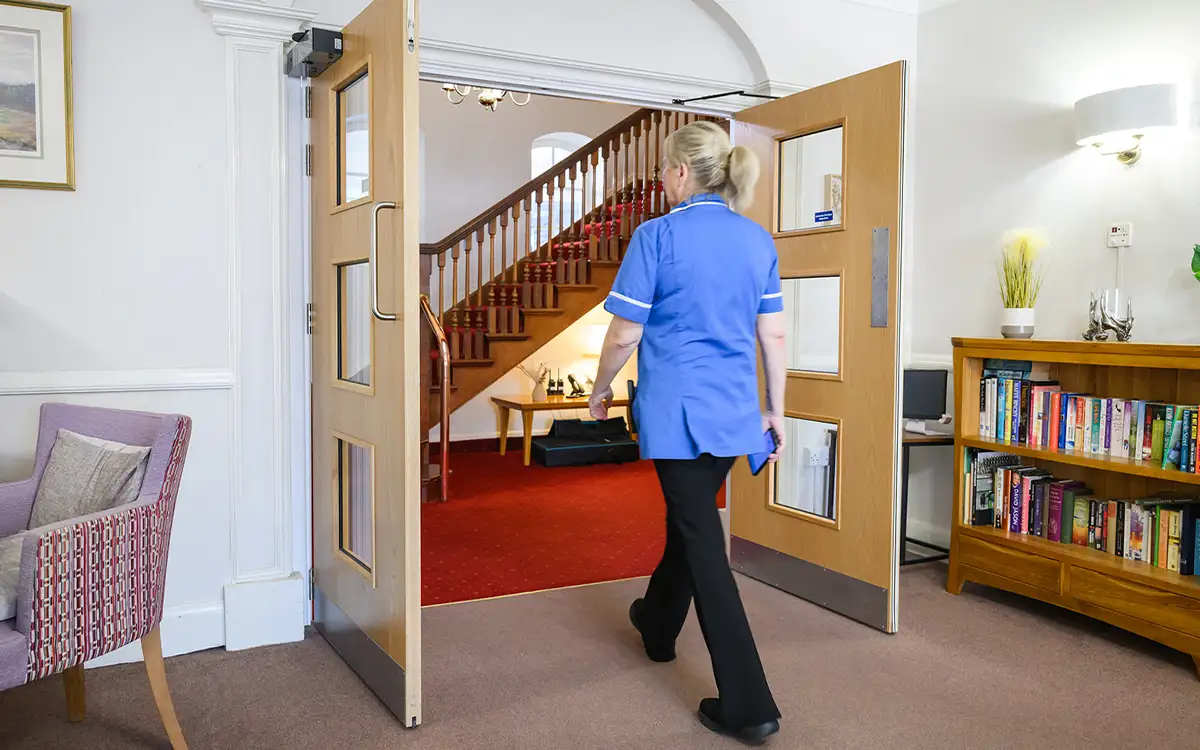
A Dorgard from Fireco compliantly keeping a school fire door open.
What’s actually at stake
A fire door held open by a doorstop is, in effect, no fire door at all. These doors are engineered to contain smoke and flames for a minimum of 30 minutes – a window of time that exists specifically to allow evacuation and limit the spread of fire through a building. Remove that window, and you remove the margin that fire safety planning depends on.
For school business managers, the consequences don’t stop at the immediate physical risk. A propped fire door can invalidate insurance, result in enforcement action from the fire authority, and – if the worst happens – place the Responsible Person in a position of serious legal exposure. “Did you know the door was being propped open?” is not a question anyone should have to answer in front of an inquiry.
More signs won’t fix it
The instinct when faced with a persistent compliance problem is to communicate harder. Put up a notice, send an email or mention it in the next briefing. And for a fortnight or so, things can improve before old habits quietly reassert themselves.
The problem isn’t that the staff don’t care. It’s that the traditional fire door, in many school environments, simply doesn’t work for the people who have to use it every day. Working against ingrained habits is exhausting, and you rarely win. The more productive question is: how do you design around it?
In my experience, reminders and signage fail because they rely on the human memory rather than fixing the physical problem. If a sign is saying ‘Keep Shut’ and you need some ventilation, people will wedge the door open without even thinking they are breaking safety rules.
Tony White, Field Service Engineer, Fireco.
Dorgard Pro: There is a better way
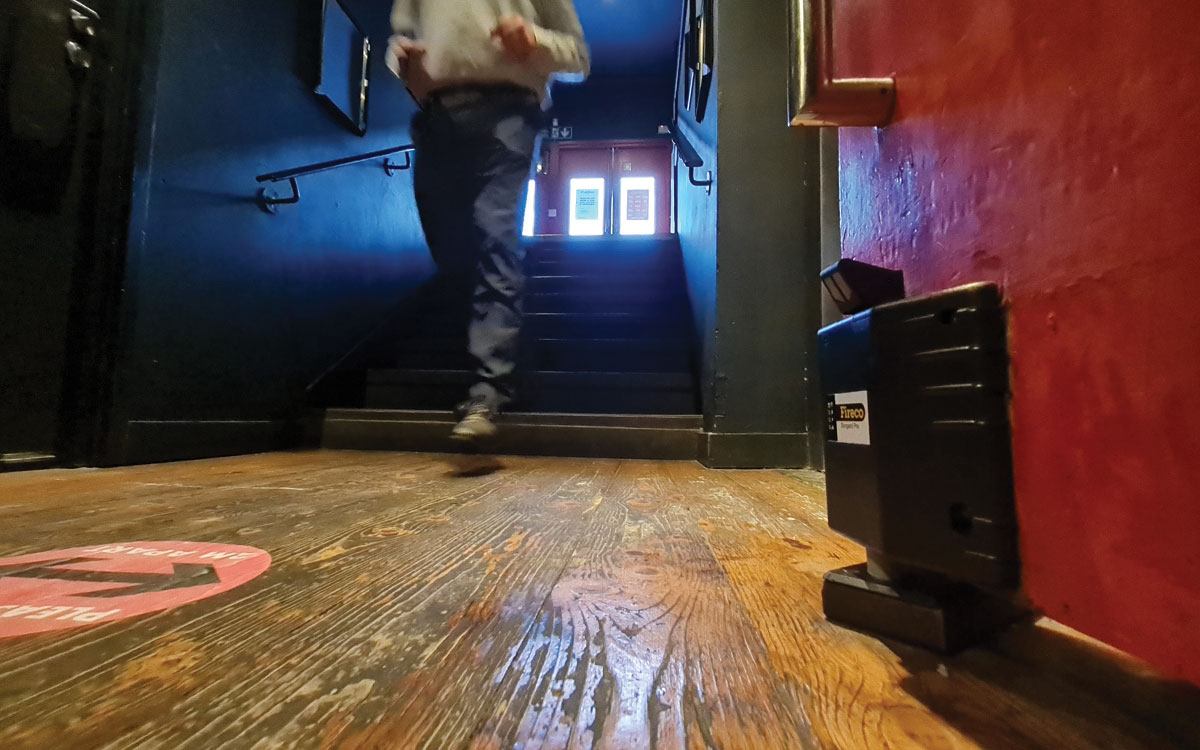
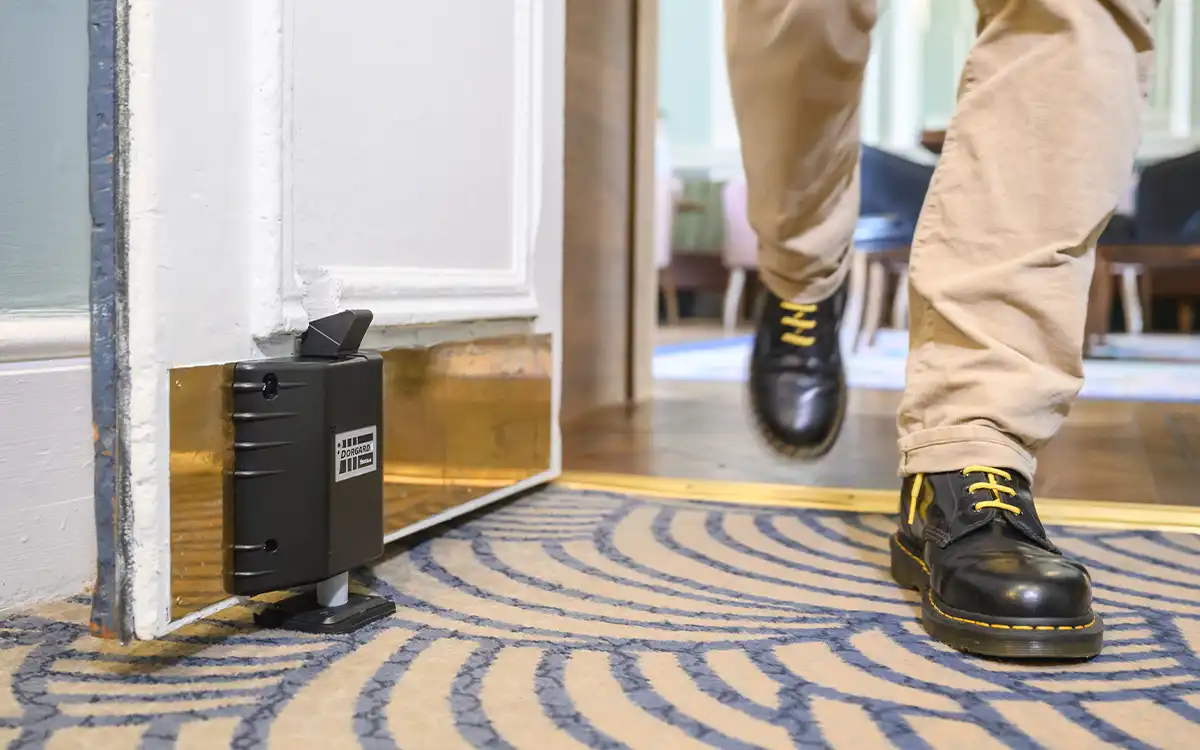
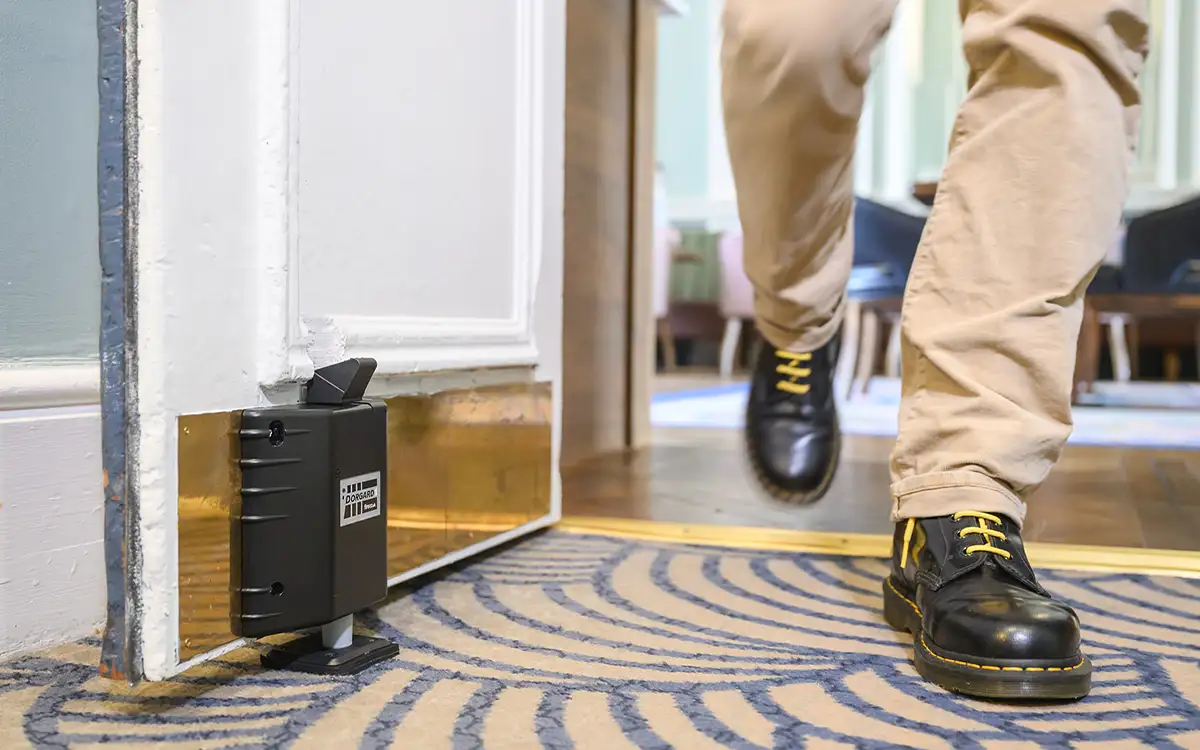
Dorgard Pro is a fire door retainer that holds fire doors open legally during the working day – and closes them automatically the instant a fire alarm is activated. No manual intervention is required and no reliance on someone remembering to close the door before they leave the room.
Dorgard Pro is controlled by ProHub, which connects directly to the fire alarm panel – offering the highest level of compliance for your building.
In practical terms, that means:
- The ventilation problem is solved – doors can be held open legitimately, with full compliance maintained.
- The traffic problem is also solved – staff and students move freely without wrestling with heavy closers all day.
- When the alarm sounds, every Dorgard Pro-fitted door closes automatically, whatever else is happening in the building.
- Suitable for high-risk zones, including corridors, kitchens and stairwells.
- ProHub checks the status of all units for you, so nothing gets missed.
- Peace of mind with a two-year warranty.
For school business managers, it turns a persistent compliance headache into a solved problem. For site teams, it removes a thankless daily battle. For the Responsible Person, it means that the answer to “Are your fire doors being propped open?” is finally, and reliably, “no.”
A final word
The wedged fire door is one of those problems that’s easy to let slide, because on any given day nothing really bad tends to happen – until it does. In a school environment, with hundreds of children in the building, the stakes of getting this wrong are hard to overstate.
The good news is that this is genuinely solvable – not through more enforcement, more notices, or more conversations that don’t resonate, but through a straightforward piece of technology that works with the way people actually behave, rather than against it.
If your school is still fighting the wedge, there’s a better approach. It’s called Dorgard. And it’s been solving this problem for over 30 years.
Want to find out more about Dorgard Pro for schools or other buildings? Speak to one of our experts on 01273 320650

0 Comments